#5 - Arrival of flies - 4/15/25

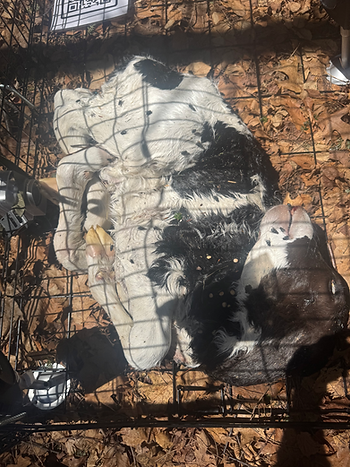
When I went back out on Monday, 4/14/25, there was an abundance of flies on the carcass (Fig.1), as well as one small moth that I was unable to photograph. The flies were shockingly loud, and while they would fly away as I attempted to catch them, they would return to the carcass immediately.
One thing I found to be morbidly fascinating was how the flies would crawl in and out of the calf's sunken eyes, as well as its now ajar mouth. I am curious as to what types of flies (or necrophagous insects, in general) tend to be drawn to the softer tissues of the body and why. That's definitely something I'll have to do more digging on!


Once I managed to collect three flies from the head portion of the calf, I put them into small plastic jars inside of a plastic bag (Fig. 2) to transport them out of the woods (and ensure they couldn't escape on my trek to the freezer located in the science building). I planned to identify them and pin them the next day (4/15/25), once they'd no longer be buzzing around.
Today (4/15/25), I came to class and retrieved them from the freezer and began to pin them. As I have never pinned anything before, I watched a quick YouTube video by an account named @dailyentomoligist4953 in order to get a quick understanding of how to proceed.
Once I pinned the insects to the best of my (inexperienced) abilities, I realised they all appeared to be the same type of fly. I identified them using "The Blowflies of North America" by David G Hall, and discovered that it is (potentially) Calliphora vicina, also know as a blue blow fly. They're part of Calliphoridae family (which included blow flies and bottle flies), and to my understanding they're one of the more important species for forensic entomology, as they are one of the first colonisers of the body.


Comments